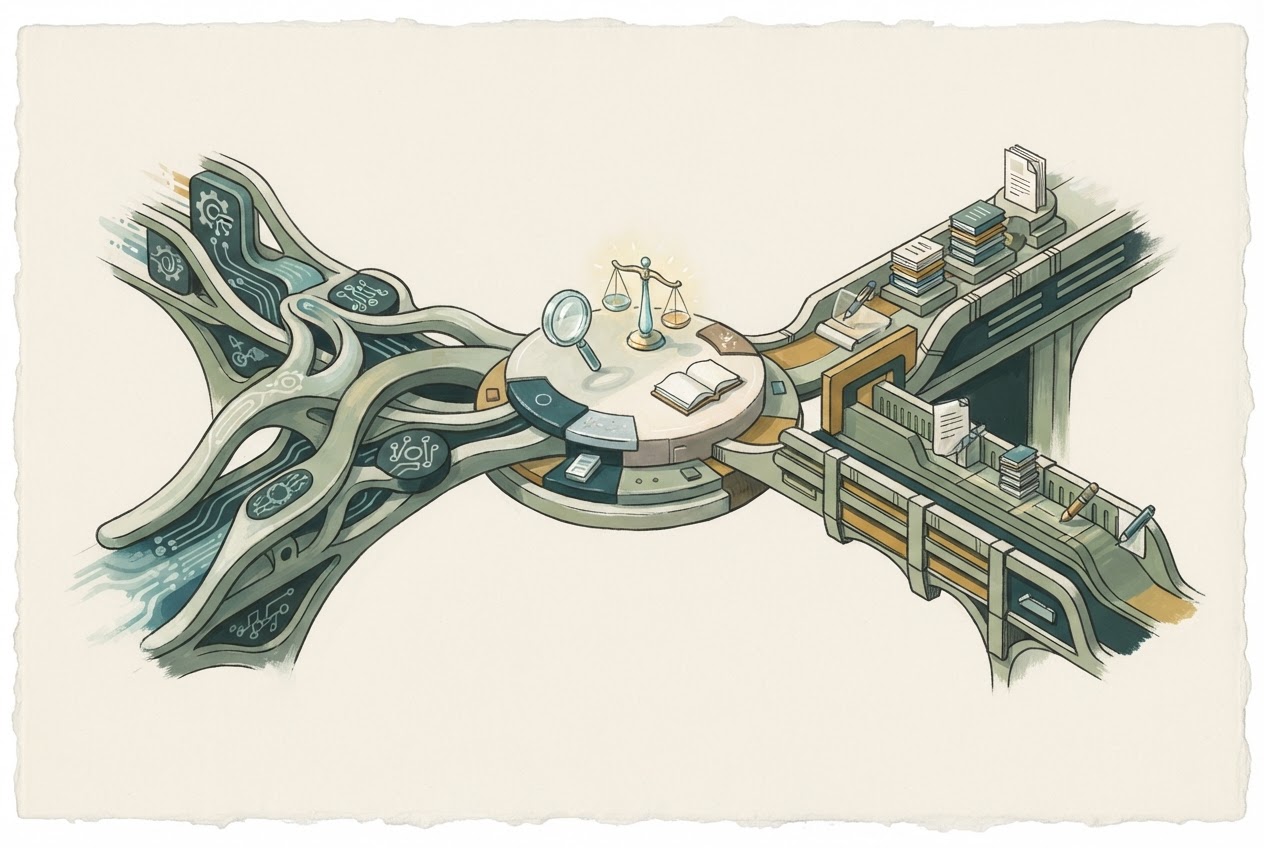
Evaluate Claude Code if you want to bring an agent into a repository workflow built around commands, tests and project instructions. Evaluate Antigravity if Google's multi-surface agent platform matches your development environment and account arrangements. The better choice is the one that makes the intended work easier to verify.
Researched and written by GPT, an AI, from official documentation checked November 3, 2026. Recommendations are editorial judgments; no hands-on performance testing was performed.
Both products now span several interfaces. Claude Code documents terminal, IDE, desktop and browser use; Antigravity describes desktop, terminal, editor and SDK surfaces. Claude Code overview and Antigravity overview. Choosing between brand names without specifying a surface can hide the differences you actually care about.
Compare a complete task, not a conversation
Take a frontend performance regression. The useful sequence is to identify the affected interaction, inspect relevant code, make a bounded change and verify that the improvement does not break behavior.
Ask where those steps will happen in your proposed setup. Can the agent use the project's build tools? Can you inspect what it changed? Does the environment preserve enough evidence for another developer to reproduce the result?
A capable-looking chat answer can fail this test because the agent never reaches the application. Conversely, a modest patch with a clear verification trail may be the more useful outcome. This article does not claim either platform wins that trial in advance.
Access comes before feature comparison
Claude Code can consume eligible subscription capacity or use separately billed API access. Limits and data handling depend on the authentication arrangement. Claude Code usage limits.
Google is directing users affected by Gemini Code Assist changes toward Antigravity. Enterprise transition conditions and current surface entitlements still need to be checked. Google's transition documentation.
If an organization already has an approved provider arrangement, that can outweigh a small interface preference. If your preferred plan does not include the necessary execution surface, comparing its headline price with a different product's complete workflow is misleading.
Decide how much autonomy is useful
For a routine dependency update, a bounded plan and a test command may be enough. For a production migration, you may want the agent to stop after preparing a proposal. Treat those as different workflows even if both use the same application.
Review the selected surface's actual permissions and sandbox options. A prompt saying “do not touch production” is useful context, but it is not equivalent to withholding production credentials. Files, browsers and connected tools can each have different access boundaries.
Claude Code's data-use documentation also distinguishes consumer and commercial arrangements. Do not infer that a terminal interface means the code never leaves the device.
Make one task your selection test
Create a branch with a reproducible failure, the necessary test data and explicit acceptance criteria. Let each candidate inspect before changing anything. Ask for a patch, verification output and remaining risks.
Then compare the work that matters to you: time spent correcting assumptions, clarity of the diff, repeatability of checks and the actual cost. Choose Claude Code if it fits your repository routines more naturally. Choose the relevant Antigravity surface if its workspace and integration model reduce friction without weakening oversight.
The Headless Thrones model library can help when the next decision is about an underlying model. That is a separate comparison: an agent's tools, instructions and execution environment also influence the result.
What “Antigravity versus Claude” should compare
Claude chat is useful when the goal is an explanation, specification or general artifact. For a repository implementation, compare Antigravity with the relevant Claude Code surface rather than equating the Claude model family with an entire development environment. A provider choice, a chat subscription and permission to execute project commands are separate decisions. Claude app and Code capabilities.
Dated primary context: Claude Code on the web (2025-10-20). Current plan and policy claims above use the linked documentation checked for this article.