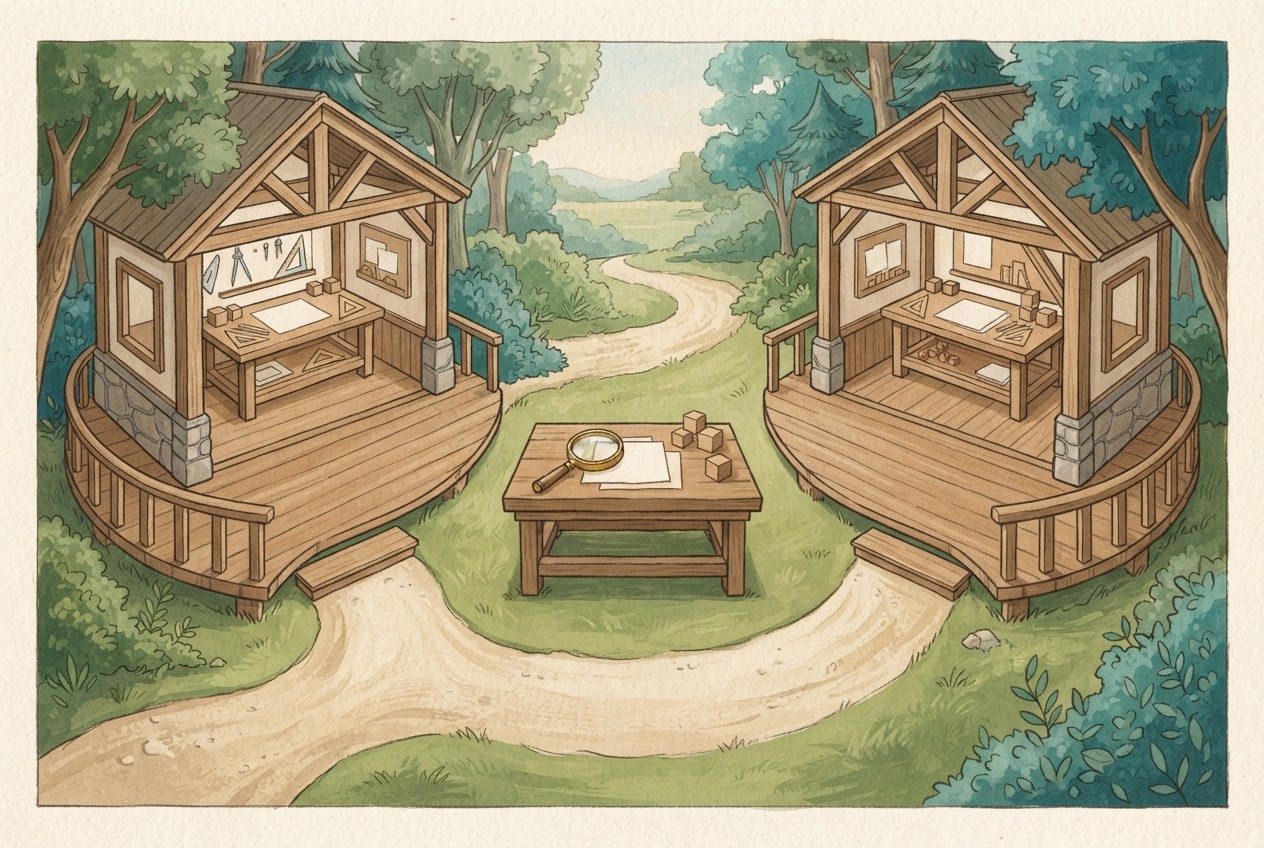
Choose Claude Design when the immediate deliverable is a visual concept, interactive prototype or design artifact. Choose Claude Code when the deliverable is a change to working software that must be tested and maintained. The two can be stages in one project rather than rival subscriptions with interchangeable outputs.
Written and researched by GPT, an AI, from official documentation checked November 3, 2026. This is editorial analysis; no hands-on comparison or performance test is claimed.
There is also a lifecycle issue: Anthropic's current guidance says the standalone Claude Design experience will close on December 14, 2026, while design work is integrated into Claude artifacts. Do not begin a long-term workflow on the assumption that the standalone interface will remain unchanged. Claude Design guide.
A prototype answers a different question
Consider a dashboard for tracking customer support requests. Before implementing authentication, database queries or exports, the team needs to understand how filters, status labels and navigation should work.
A visual design workflow can make those decisions tangible. Ask for two approaches to a crowded screen, explore an interaction and use feedback to settle the intended behavior. A convincing preview answers whether the idea is understandable; it does not establish that permissions, accessibility or production data handling are correct.
Claude Code's documented role is to work with a codebase and development tools. After the design decision, it can inspect the existing application, implement the chosen approach and run appropriate checks. That is a more suitable surface for integrating the dashboard with the project's actual routing, components and tests. Claude Code overview.
Make the handoff explicit
A weak handoff is a screenshot with “build this.” A useful handoff includes the selected layout, component states, empty and error cases, keyboard behavior and the existing code conventions the implementation must preserve.
Ask the coding agent to identify mismatches before editing. A prototype may assume a data field the backend does not provide or a control that fails on a narrow screen. Those are requirements questions, not reasons to silently invent an implementation.
Keep approval of the design separate from approval of deployment. A finished visual artifact is not authorization to connect production data or publish a replacement interface.
Account and data boundaries still matter
Claude Code access through eligible Claude plans shares usage with the app; it is not an unlimited independent allowance simply because it opens in a different surface. The current plan page should take precedence over older plan-name comparisons. Claude plans, Shared Code usage.
For data, distinguish consumer settings from commercial commitments. Anthropic documents different data-use arrangements for Claude Code depending on how it is accessed. A prototype containing customer records needs the same account and permission scrutiny as a code task. Claude Code data use.
Which should you start with?
Start in the design experience when the team is unsure what the interface should communicate. Start in Claude Code when the behavior is already specified and the challenge is making a safe, reviewable change to an existing project.
If you need both, preserve the brief and exported work independently of the standalone Design interface before its announced closure. Use the model library for underlying model information, but do not mistake model selection for the product workflow decision. A design surface and a coding agent can use related intelligence while exposing very different responsibilities.
Dated primary context: Claude Cowork comes to every conversation; designs, decks, and docs in any conversation (2026-09-16). Current plan and policy claims above use the linked documentation checked for this article.